
As businesses shift to IP-based communication systems, voice traffic is no longer limited to traditional phone lines. VoIP, SIP trunking, and unified communications now power enterprise connectivity. But with this digital transformation comes a serious need for security, interoperability, and performance control.
This is where a Session Border Controller (SBC) becomes essential.
What Is a SBC?
A Session Border Controller is a specialized network device that manages and secures real-time communication sessions over IP networks. It sits at the “border” between two networks — typically between an enterprise network and a service provider.
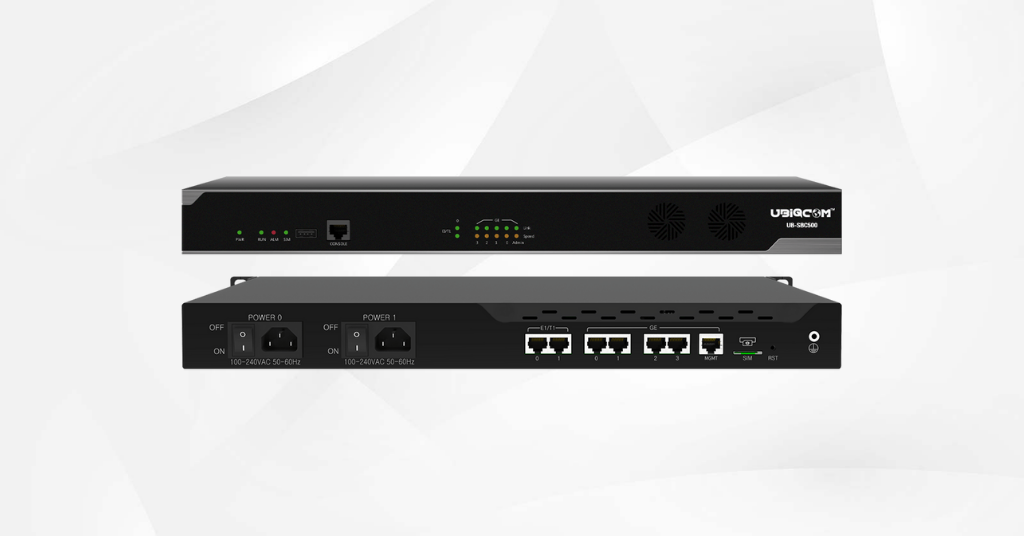
In simple terms, an SBC works as a secure gateway that controls how VoIP calls are established, maintained, and terminated.
It is commonly deployed in:
- SIP trunking environments
- IP PBX systems
- Unified Communication platforms
- Contact centers
- Telecom operator networks
- Cloud telephony deployments
Without a SBC, VoIP systems are exposed to security risks and compatibility issues.
Why Do Businesses Need a Session Border Controller?
When voice traffic travels over IP networks, it becomes vulnerable to threats and technical challenges. A SBC ensures that communication remains secure and reliable.
Businesses use a Session Border Controller to:
- Protect against SIP-based cyber attacks
- Prevent call fraud and toll bypass
- Ensure interoperability between vendors
- Maintain consistent call quality
- Control bandwidth usage
- Enable secure remote connectivity
In modern VoIP networks, an SBC is not just a security device — it is a performance management solution.
How Does a SBC Work?
To understand how a SBC works, think of it as a traffic controller for voice sessions. It monitors and controls every call that passes between networks.
Here’s how the process typically works:
1. Call Signaling Inspection
When a call is initiated, the SBC analyzes the SIP signaling request before allowing it to pass through.
It checks:
- Caller authentication
- Authorization policies
- Routing rules
- Call admission limits
If the session meets network policies, the SBC allows the call to proceed. If not, it blocks or modifies the request.
2. Security Enforcement and Threat Protection
A Session Border Controller actively protects the network from external threats.
It provides:
- DoS and DDoS attack prevention
- SIP message validation
- Topology hiding (concealing internal IP addresses)
- Encryption using TLS and SRTP
- Access control filtering
This security layer ensures safe communication between enterprises and service providers.
3. Interoperability and SIP Normalization
Different vendors may implement SIP slightly differently. These inconsistencies can cause failed calls or poor performance.
A SBC resolves this by:
- Modifying SIP headers
- Normalizing signaling protocols
- Translating between incompatible systems
- Ensuring smooth communication between IP PBX and SIP trunk providers
This function makes multi-vendor environments stable and efficient.
4. Media Handling and NAT Traversal
One of the biggest challenges in VoIP communication is NAT traversal. Firewalls and routers often disrupt media streams.
A Session Border Controller solves this by:
- Anchoring media streams
- Managing RTP routing
- Enabling NAT traversal
- Preventing one-way audio issues
- Stabilizing call sessions
This ensures uninterrupted and high-quality voice communication.
5. Quality of Service (QoS) and Bandwidth Control
Voice communication requires consistent bandwidth. Even small disruptions can affect call clarity.
A SBC improves performance by:
- Prioritizing voice traffic
- Limiting simultaneous sessions
- Managing bandwidth allocation
- Monitoring real-time call quality
- Preventing network congestion
This keeps voice calls clear, stable, and professional.
Key Features of a Session Border Controller
A modern SBC typically includes the following capabilities:
- SIP normalization
- Call admission control
- Transcoding support
- High availability deployment
- Load balancing
- Advanced security filtering
- Session monitoring and analytics
These features help enterprises maintain a secure and scalable VoIP infrastructure.
Types of SBC Deployments
There are two primary deployment models for Session Border Controllers.
Enterprise SBC
Designed for businesses that use IP PBX systems and SIP trunking. It secures communication between the internal network and external providers.
Best suited for:
- Medium to large enterprises
- Multi-location businesses
- Hybrid work environments
- Cloud PBX deployments
Service Provider SBC
Used by telecom operators and carriers to manage high volumes of VoIP traffic across customer networks.
Typically supports:
- Large-scale session handling
- Carrier interconnect management
- Traffic routing and load balancing
- Subscriber security enforcement
Where Is a SBC Placed in the Network?
A Session Border Controller is deployed at the network edge — between two communication domains.
Common placement scenarios include:
- Between enterprise LAN and SIP trunk provider
- Between cloud telephony platform and corporate network
- Between telecom carriers
- At data center edge infrastructure
It acts as a control point for all voice sessions crossing the network boundary.
Benefits of Using a SBC
Implementing a Session Border Controller provides measurable advantages:
- Enhanced network security
- Reduced risk of VoIP fraud
- Seamless vendor interoperability
- Improved call quality
- Better bandwidth management
- Scalability for future growth
- Compliance with telecom regulations
In modern unified communication systems, SBC deployment ensures reliability and operational control.
Conclusion
So, what is a SBC and how does it work?
A Session Border Controller is a critical network element that secures, manages, and optimizes VoIP communication at the network border. It validates sessions, protects against threats, resolves interoperability issues, ensures NAT traversal, and maintains call quality.