
As businesses move toward modern communication systems, VoIP (Voice over Internet Protocol) has become a preferred choice due to its flexibility, scalability, and cost-saving benefits. However, many organizations still rely on traditional PBX systems and E1 lines for daily communication. Replacing an entire telecom infrastructure can be expensive and disruptive, making a PRI Gateway an essential solution for a smooth transition.
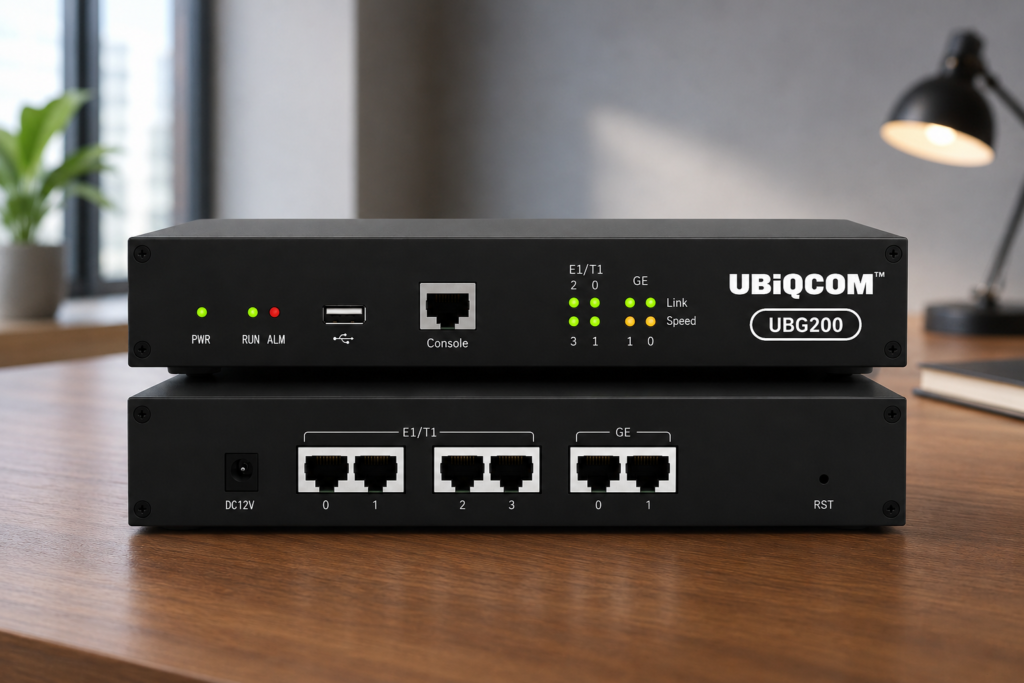
A PRI Gateway allows businesses to connect legacy telephony systems with modern VoIP networks, enabling seamless communication while protecting existing investments. Whether functioning as a TDM converter, SIP Converter, or SIP to E1 solution, a PRI Gateway simplifies VoIP migration and helps organizations modernize at their own pace.
What Is a PRI Gateway?
A PRI Gateway is a device that bridges traditional E1/T1-based telecom networks with SIP-based VoIP networks. It converts voice traffic between legacy telephony systems and modern IP communication platforms, allowing businesses to continue using their existing PBX infrastructure while benefiting from VoIP technology.
Instead of replacing expensive telecom equipment, organizations can deploy a PRI Gateway to connect older systems with newer communication networks.
The Role of PRI Gateways in VoIP Transition
PRI Gateways bridge legacy telephony systems with modern VoIP networks, enabling smooth and cost-effective migration without replacing existing infrastructure.
Preserve Existing Telecom Infrastructure
Many businesses have invested significantly in traditional PBX systems and E1 connectivity. A PRI Gateway allows these systems to remain operational while integrating with VoIP services, reducing the need for costly upgrades.
Enable Seamless Network Integration
One of the biggest challenges during VoIP migration is ensuring compatibility between old and new technologies. A PRI Gateway acts as a bridge, enabling smooth communication between traditional telecom systems and SIP-based networks.
Reduce Migration Costs
A complete replacement of telecom infrastructure can require substantial investment. By using a PRI Gateway, businesses can migrate gradually to VoIP while continuing to use their existing equipment, significantly reducing costs.
PRI Gateway as a TDM Converter
Traditional telecom systems rely on Time Division Multiplexing (TDM) technology for voice communication. Modern VoIP networks, however, operate using IP protocols.
A PRI Gateway functions as a TDM converter, converting voice traffic between TDM-based networks and IP-based communication systems. This capability allows businesses to connect legacy PBX equipment to modern VoIP services without disrupting operations.
Benefits of using a PRI Gateway as a TDM converter include:
- Extending the life of existing telecom equipment
- Supporting gradual VoIP migration
- Reducing infrastructure replacement costs
- Maintaining uninterrupted communication
PRI Gateway as a SIP Converter
SIP is the standard protocol used by modern VoIP platforms. Traditional telecom systems often cannot communicate directly with SIP networks.
A PRI Gateway acts as a SIP Converter, translating signaling and voice traffic between SIP-based services and legacy telephony systems. This enables businesses to take advantage of SIP trunking while continuing to use their current PBX infrastructure.
As a SIP Converter, the gateway helps:
- Connect SIP trunks to traditional PBX systems
- Improve interoperability between communication platforms
- Simplify network integration
- Enhance communication flexibility
PRI Gateway for SIP to E1 Connectivity
Many businesses use E1-based PBX systems but want to access the benefits of SIP trunking services. A PRI Gateway provides reliable SIP to E1 conversion, allowing SIP networks and E1 infrastructure to work together seamlessly.
With SIP to E1 functionality, businesses can:
- Connect SIP trunks to E1-based PBXs
- Reduce telecom operating costs
- Improve call routing efficiency
- Modernize communication systems without replacing existing hardware
This capability makes PRI Gateways an ideal solution for organizations seeking a cost-effective migration path to VoIP.
Common Applications of PRI Gateways
PRI Gateways are widely used in:
- Enterprises with legacy PBX systems
- Contact centers
- Government organizations
- Educational institutions
- Healthcare facilities
- Hospitality businesses
- Telecom service providers
These environments often require seamless communication between traditional telephony infrastructure and modern VoIP networks.
Why Choose UBIQCOM PRI Gateways?
UBIQCOM PRI Gateways are designed to help businesses transition smoothly from traditional telephony to VoIP. By serving as a reliable TDM converter, SIP Converter, and SIP to E1 solution, UBIQCOM enables organizations to connect legacy E1 infrastructure with modern SIP-based networks efficiently.
With robust performance, easy deployment, high call capacity, and dependable voice quality, UBIQCOM PRI Gateways provide the flexibility businesses need to modernize communications without disrupting existing operations.
Conclusion
VoIP migration does not have to involve replacing your entire telecom infrastructure. A PRI Gateway provides a practical and cost-effective way to connect traditional PBX systems with modern SIP networks.
Whether functioning as a TDM converter, SIP Converter, or SIP to E1 gateway, a PRI Gateway simplifies integration, reduces communication costs, and supports long-term business growth. UBIQCOM PRI Gateways offer the reliability, scalability, and performance organizations need to achieve a seamless transition to modern VoIP communication.
Service Areas:
PRI Gateway Authorized Distributor in Noida | PRI Gateway Distributor in Delhi-NCR | PRI Gateway Dealer in Noida | PRI Gateway Provider in Lucknow | PRI Gateway Dealer in Kolkata | PRI Gateway Distributor in Bengaluru | PRI Gateway in Ahmedabad | PRI Gateway Authorized Supplier in Chennai | PRI Gateway Distributor in Pune | PRI Gateway Distributor in Hyderabad | PRI Gateway Supplier in Kochi | PRI Gateway Service Provider in Mumbai